
The $40 Billion AI Fraud Crisis and Real-time fraud detection

📰 Executive Summary: AI Fraud Detection Crisis 2025
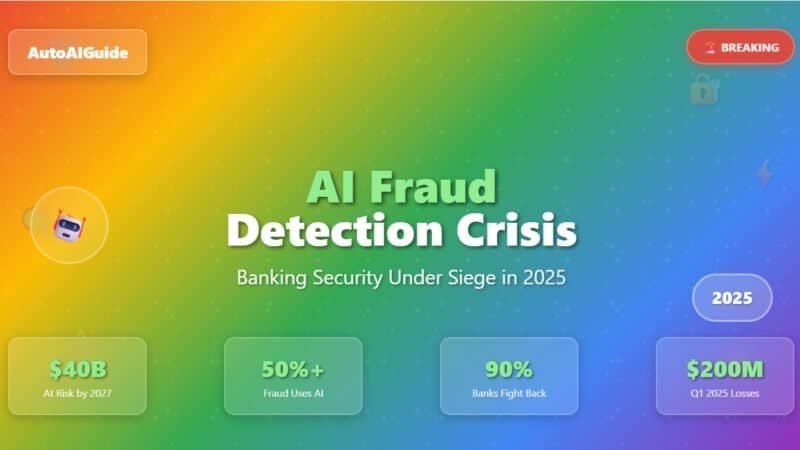
Breaking developments in AI fraud detection reveal a critical arms race between cybercriminals and financial institutions. Latest industry reports confirm that over 50% of fraud now involves artificial intelligence, with deepfake-enabled banking losses exceeding $200 million in Q1 2025 alone. Meanwhile, 90% of financial institutions are rapidly deploying advanced AI fraud prevention systems to combat these sophisticated deepfake threats. This comprehensive analysis examines breakthrough fraud detection technologies, real-world case studies, and practical business fraud protection strategies for navigating the $40 billion crisis facing organizations in 2025.
📋 Quick Navigation
Breaking: AI Fraud Detection Markets Face $200 Million Q1 2025 Deepfake Crisis
The financial services industry faces an unprecedented challenge as deepfake-enabled fraud caused over $200 million in losses during the first quarter of 2025 alone, according to Resemble AI’s latest incident report. This staggering figure represents just the tip of the iceberg in what cybersecurity experts are calling the most significant transformation in financial crime since the advent of digital banking and real-time fraud detection systems.
🚨 Are you prepared for the deepfake revolution? With 92% of financial institutions reporting that fraudsters are using generative AI, how is your organization adapting its security protocols? Share your experience – your insights could help others protect their businesses.
Recent data from Feedzai’s comprehensive 2025 AI Trends in Fraud and Financial Crime Prevention report reveals that more than 50% of all fraud cases now involve artificial intelligence. This represents a fundamental shift in the threat landscape, with criminals leveraging the same technologies that financial institutions are using to protect their customers.
The scope of this challenge extends beyond traditional financial institutions. Fintech companies are experiencing average losses of $637,000 per incident, while traditional banks face $570,000 per incident, according to Regula’s 2024 deepfake trends research. These figures underscore the universal nature of the threat across all segments of financial services.
The Evolving AI Fraud Landscape: From Simple Scams to Sophisticated Operations
The sophistication of AI-powered fraud has evolved dramatically from basic phishing emails to complex, multi-layered attacks that can fool even experienced financial professionals. Understanding these threat vectors is crucial for developing effective defensive strategies.
Deepfake Technology: The New Weapon of Choice
Deepfakes have emerged as the most concerning development in financial fraud. These AI-generated videos, images, and audio files can create convincing impersonations of executives, customers, or financial advisors. The technology has become so accessible that basic deepfake tools are available on the dark web for as little as $20, democratizing sophisticated fraud capabilities.
Voice cloning represents the most prevalent threat, with 60% of fraud professionals identifying it as a major concern. This technology can replicate an individual’s voice from just a few minutes of audio samples, often sourced from publicly available content like YouTube videos or corporate presentations.
Geographic Impact and Regional Variations
The global nature of AI fraud reveals interesting regional patterns that provide insights into both vulnerability and resilience factors across different markets.
The variation in regional losses reflects differences in regulatory frameworks, technological adoption, and defensive capabilities. Mexico’s position at the top of loss statistics may reflect the rapid digitalization of financial services without corresponding security infrastructure investments.
Advanced AI Fraud Prevention Systems: How Banks Fight Fire with Fire
Financial institutions are responding to AI-powered deepfake threats with equally sophisticated AI-driven fraud detection and prevention systems. The cybersecurity arms race between criminals and defenders has accelerated innovation in real-time fraud detection technologies, creating new opportunities for business automation and enhanced security in financial operations.
Real-Time Detection Capabilities
Modern AI fraud detection systems operate in near real-time, analyzing transactions and user behavior within milliseconds to identify potential threats. Companies like Hawk have introduced “Day One Defense Models” that enable financial institutions to deploy tailored protection systems in just days rather than months.
💡 Implementing AI fraud detection in your business? What challenges have you encountered when evaluating real-time fraud prevention solutions? Join the discussion – learn from others who’ve successfully deployed these systems.
“Fraud doesn’t wait — and now, neither do our customers. With our new Fraud Day One Defense Models, financial institutions can now deploy tailored protection in just days. This new offering reflects our commitment at Hawk to helping customers act fast and outpace threats from day one.”
— Wolfgang Berner, Chief Product Officer and Co-Founder, Hawk
These systems leverage multiple data sources and analytical techniques to create comprehensive threat profiles:
AI Fraud Detection Capabilities Evolution
Basic pattern matching and rule-based systems for known fraud signatures
Real-time user behavior profiling and anomaly detection across multiple channels
Sophisticated neural networks for complex pattern recognition and prediction
AI systems that can generate defensive scenarios and predict emerging threats
Multi-Layered Authentication and Verification
The evolution beyond traditional security measures has led to sophisticated multi-factor authentication systems that combine behavioral biometrics, device fingerprinting, and contextual analysis. These systems create unique user profiles that are extremely difficult for fraudsters to replicate, even with advanced AI tools.
Device fingerprinting technology has emerged as a particularly effective defense, creating persistent device identifiers that remain stable even when users employ privacy measures like VPNs or clear cookies. This technology enables financial institutions to maintain consistent risk assessment capabilities across different user sessions and devices.
Government and Regulatory Response
The U.S. Treasury’s Office of Payment Integrity demonstrates the potential of AI fraud detection at scale. Their implementation of enhanced AI-powered fraud detection processes recovered over $375 million in fiscal year 2023, representing a significant return on investment for taxpayers and validating the effectiveness of AI-driven approaches.
This success story provides a blueprint for financial institutions considering similar implementations. The Treasury’s approach combines near real-time detection with strengthened recovery processes, enabling rapid identification and mitigation of fraudulent payments before they can be fully processed.
Real-World Impact: Learning from High-Profile Cases
Recent high-profile fraud cases provide crucial insights into both the sophistication of modern AI-powered fraud and the effectiveness of various defensive measures. These case studies offer practical lessons for businesses seeking to strengthen their own fraud prevention capabilities.
The $25 Million Hong Kong Deepfake Heist
In January 2024, an employee at a Hong Kong-based multinational firm transferred $25 million to fraudsters after participating in what she believed was a legitimate video conference with her company’s CFO and other colleagues. The entire call was a sophisticated deepfake operation that replicated the appearance and mannerisms of multiple executives.
This case highlights several critical vulnerabilities in traditional verification processes:
- Over-reliance on visual verification: The employee trusted what she saw without additional verification steps
- Absence of out-of-band authentication: No secondary communication channel was used to confirm the unusual request
- Inadequate approval processes: A single employee could authorize such a large transfer without additional oversight
Arup Engineering Case
Loss: $25 million to deepfake CFO video call scam
Key Lessons Learned:
- Video calls can be completely fabricated with AI
- Multiple “participants” can all be AI-generated
- Urgent financial requests require verification
- Multi-channel authentication is essential
Hong Kong Banking Network
Loss: $193 million from AI face-swapping fraud network
Key Lessons Learned:
- Lost ID documents become AI training data
- Account opening processes are vulnerable
- Document verification needs AI detection
- Criminal networks operate at massive scale
US Treasury Success Story
Recovery: $375 million recovered through AI fraud detection
Key Success Factors:
- AI can successfully combat AI-powered fraud
- Real-time processing enables rapid recovery
- Government-scale implementation is viable
- Strong ROI justifies AI investment costs
The Hong Kong Account Opening Network
In April 2025, Hong Kong police intercepted a sophisticated fraud network that used AI face-swapping technology to open fraudulent bank accounts. The criminals used lost identification documents as source material, merging their own faces onto legitimate IDs to bypass account opening procedures. The network caused losses exceeding $193 million before being detected.
This case demonstrates the evolving nature of identity fraud and the need for advanced verification technologies that can detect AI-generated or manipulated content during the account opening process.
Success Story: U.S. Treasury AI Implementation
The U.S. Treasury’s success in recovering $375 million through AI-enhanced fraud detection provides a positive counterpoint to these losses. Their approach combined machine learning algorithms with human oversight to identify potentially fraudulent payments in near real-time, enabling rapid recovery before funds could be fully dispersed.
🔍 Want to understand how these cases apply to your business? What specific fraud prevention measures has your organization implemented in response to AI threats? Share your approach – help build a knowledge base for the community.
Key factors in the Treasury’s success included:
- Real-time processing capabilities: Detection occurred during transaction processing rather than post-facto analysis
- Multi-source data integration: Systems analyzed patterns across multiple government payment systems
- Human-AI collaboration: Automated detection combined with human investigation and verification
- Rapid response protocols: Streamlined processes enabled quick action on identified threats
Strategic Business Implications for Entrepreneurs and Organizations
The rapid evolution of AI fraud threatens businesses across all sectors, not just traditional financial institutions. Entrepreneurs and business leaders must understand both the direct risks to their operations and the opportunities presented by advanced fraud detection technologies.
Direct Financial Impact on Business Operations
Research from Regula indicates that 92% of surveyed businesses have suffered financial losses due to deepfake fraud, with average losses reaching $450,000 per incident. For startups and growing businesses, a single significant fraud event can represent an existential threat to operations.
AI Fraud Impact by Business Size
| Business Size | Average Loss | Detection Rate | Recovery Rate | Implementation Cost |
|---|---|---|---|---|
| Startup (< $1M revenue) | $150,000 | 35% | 25% | $5,000/month |
| SMB ($1M-$10M) | $320,000 | 55% | 45% | $15,000/month |
| Mid-Market ($10M-$100M) | $580,000 | 75% | 65% | $35,000/month |
| Enterprise (> $100M) | $850,000 | 85% | 80% | $100,000/month |
Startup (< $1M revenue)
SMB ($1M-$10M)
Mid-Market ($10M-$100M)
Enterprise (> $100M)
The data reveals a concerning paradox: while larger organizations have better detection and recovery rates, they also experience higher absolute losses. This suggests that fraudsters specifically target organizations with greater financial resources, but also that investment in advanced detection systems provides measurable returns.
Cross-Industry Applications and Opportunities
The AI fraud detection technologies developed for financial services have applications across multiple industries. E-commerce platforms, healthcare organizations, insurance companies, and government agencies can all benefit from these advances.
For entrepreneurs, this represents both a challenge and an opportunity. Companies that can successfully implement AI-powered fraud prevention systems may gain competitive advantages through reduced operational risk, lower insurance costs, and enhanced customer trust.
Integration with Existing Business Processes
Successful AI fraud detection implementation requires careful integration with existing business processes. Organizations must balance security measures with user experience, ensuring that fraud prevention doesn’t create unnecessary friction for legitimate customers and employees.
Key considerations for implementation include:
- Scalability planning: Systems must accommodate business growth without proportional cost increases
- False positive management: Balancing security with customer experience requires careful tuning
- Staff training and change management: Teams need education on new processes and threat recognition
- Regulatory compliance: AI systems must meet industry-specific regulatory requirements
Similar to how AI treasury automation is transforming corporate cash management, fraud detection systems are becoming integral components of comprehensive financial automation strategies.
ROI Considerations and Cost-Benefit Analysis
While advanced AI fraud detection systems require significant investment, the potential returns are substantial. Organizations must evaluate not only the direct cost savings from prevented fraud but also the indirect benefits of enhanced reputation, customer trust, and regulatory compliance.
The U.S. Treasury’s $375 million recovery demonstrates the potential for positive ROI even on large-scale implementations. For smaller organizations, the key is selecting solutions that provide appropriate protection levels without overwhelming available resources.
Strategic Outlook: The Future of AI Fraud Prevention
The trajectory of AI fraud prevention suggests continued rapid evolution in both threat sophistication and defensive capabilities. Organizations that understand these trends and prepare accordingly will be better positioned to protect their assets and maintain customer trust.
Emerging Technologies and Defensive Capabilities
Several technological developments are shaping the future of fraud prevention:
Generative AI Defense
Next-generation AI systems that can generate defensive scenarios, predict emerging threats, and create synthetic training data for improved detection models.
Behavioral Biometrics
Advanced systems that analyze typing patterns, mouse movements, and touch gestures to create unique user profiles that are difficult to replicate.
Blockchain Integration
Immutable transaction records and smart contracts enhanced with AI capabilities for automated fraud prevention and transparent audit trails.
Real-Time Orchestration
Unified platforms that coordinate fraud detection across multiple channels and data sources, providing comprehensive threat visibility.
Regulatory Evolution and Compliance Requirements
The regulatory landscape for AI in financial services continues to evolve rapidly. Organizations must prepare for increased requirements around AI explainability, algorithmic bias prevention, and data privacy protection.
Feedzai’s TRUST Framework (Transparent, Robust, Unbiased, Secure, and Tested) represents an emerging industry standard for responsible AI implementation. Organizations that adopt similar frameworks early will be better positioned to meet future regulatory requirements.
International Cooperation and Information Sharing
The global nature of AI fraud necessitates increased international cooperation. Financial institutions, technology companies, and regulatory bodies are developing new frameworks for sharing threat intelligence while protecting customer privacy and competitive interests.
This cooperation is essential because fraudsters operate across borders and jurisdictions, often targeting vulnerabilities in international payment systems and regulatory gaps between different countries.
Predictions for 2025-2027
Based on current trends and expert analysis, several key developments are likely to emerge:
- AI Detection Arms Race: Continued escalation between AI-powered fraud and AI-powered detection, driving rapid innovation cycles
- Real-Time Prevention: Shift from post-transaction analysis to prevention during transaction processing
- Collaborative Defense: Industry-wide threat intelligence sharing platforms and cooperative defense mechanisms
- Regulatory Standardization: Harmonized international standards for AI fraud prevention and responsible AI use
- Customer Education: Increased focus on educating consumers and employees about AI fraud recognition and prevention
As the landscape continues to evolve, successful organizations will be those that maintain flexibility in their defensive strategies while building robust foundational capabilities that can adapt to emerging threats.
The intersection of AI fraud prevention with broader automation trends, similar to developments in AI-powered investment management, suggests that integrated financial technology platforms will become increasingly important for comprehensive risk management.
Conclusion: Mastering AI Fraud Detection for Business Success in 2025
The AI fraud detection landscape of 2025 represents both the greatest cybersecurity challenge and the most significant business protection opportunity in the history of financial security. With deepfake fraud losses projected to reach $40 billion by 2027, the stakes have never been higher for organizations implementing comprehensive fraud prevention strategies across all business sectors.
The evidence is unequivocal: AI-powered fraud is not a future threat—it’s a present reality that demands immediate strategic response and advanced fraud detection systems. Organizations that treat this as merely an IT problem rather than a business-critical strategic initiative do so at their own financial peril.
Yet the same technologies that enable sophisticated fraud also provide powerful defensive capabilities. The 90% of financial institutions already using AI for fraud detection demonstrate that effective solutions exist and are being successfully deployed at scale.
For entrepreneurs and business leaders, the path forward requires balancing several key considerations:
- Investment vs. Risk: The cost of advanced fraud detection systems must be weighed against the potentially catastrophic impact of successful attacks
- Security vs. Experience: Fraud prevention measures must enhance rather than hinder legitimate business operations
- Technology vs. Process: Technical solutions require supporting organizational changes and training to be effective
- Prevention vs. Response: Building both preventive capabilities and rapid response protocols provides comprehensive protection
The organizations that will thrive in this environment are those that view AI fraud prevention not as a defensive necessity but as a competitive advantage—an opportunity to build customer trust, operational resilience, and strategic differentiation in an increasingly digital economy.
The AI fraud prevention revolution is reshaping financial services and beyond. The question is not whether to participate, but how quickly and effectively organizations can adapt to this new reality.
🚀 Ready to Strengthen Your Fraud Defenses?
The AI fraud landscape changes rapidly, but you don’t have to navigate it alone. Stay informed about the latest developments, implementation strategies, and success stories that can help protect your business and drive growth in the digital economy.
Join our community of forward-thinking entrepreneurs and business leaders who are successfully implementing AI-powered security solutions.
📚 Sources and Further Reading
- Feedzai – 2025 AI Trends in Fraud and Financial Crime Prevention Report
- Deloitte – Deepfake Banking Fraud Risk on the Rise
- U.S. Treasury – AI Enhanced Fraud Detection Recovery Announcement
- Regula – The Deepfake Trends 2024 Financial Impact Study
- IBM – AI Fraud Detection in Banking Industry Analysis
- Variety – Deepfake Fraud Q1 2025 Loss Report
- Mastercard – Industry Perspectives on AI Transaction Fraud Detection
- FinTech Global – Hawk’s AI Day One Defense Models
- TrustDecision – Banking Fraud Detection 2025 Trends and Predictions
- Fortune – AI Makes Bank Scams Worse Industry Analysis