
AI-Powered Robo-Advisors Reshape Investment Management in 2025: The Evolution Beyond Traditional Automated Investing

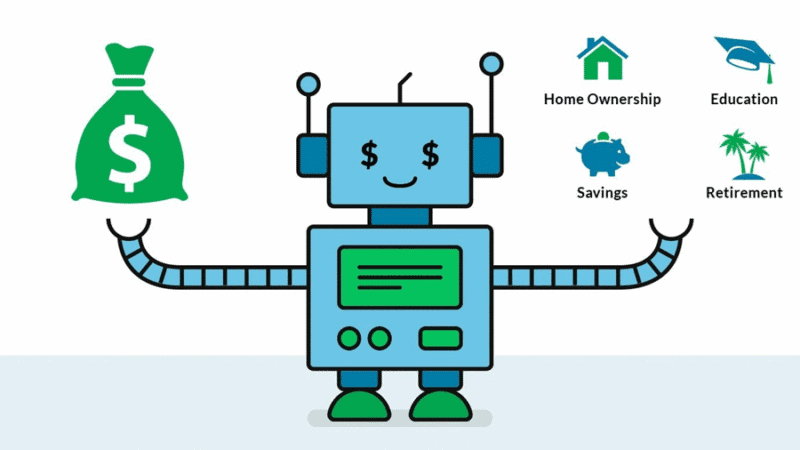
The financial services industry stands at a pivotal moment as artificial intelligence fundamentally reshapes how investors approach portfolio management. Recent developments in 2025 reveal that robo-advisors are no longer simple automated rebalancing tools but sophisticated AI-powered platforms capable of delivering personalized financial advice that rivals human expertise.
Market Growth
The robo-advisory market is projected to grow at a compound annual growth rate (CAGR) of 13.2% from 2024 to 2032, indicating massive expansion opportunities.
AI Integration
Leading platforms like Wealthfront are launching “3.0” versions with advanced AI capabilities, marking a new era in automated investment management.
Partnership Surge
Major financial institutions are forming strategic alliances, with SoFi partnering with BlackRock in November 2024 to enhance robo-advisory services.
The Next Generation of Robo-Advisors: Beyond Basic Automation
Traditional robo-advisors emerged in the 2010s as simple portfolio management tools that automatically rebalanced investments based on predetermined algorithms. However, the landscape has dramatically evolved in 2025, with artificial intelligence enabling these platforms to provide sophisticated financial planning that adapts to individual circumstances and market conditions in real-time.
Wealthfront CEO Adam Nash revealed what he calls Wealthfront 3.0, the latest version of the automated investment advisor built for increased artificial intelligence and the integration of modern application program interfaces (APIs). This development represents a fundamental shift from reactive portfolio management to proactive financial planning powered by machine learning algorithms.
The AI Advantage in Investment Management
The integration of artificial intelligence into robo-advisory platforms offers several distinct advantages over traditional automated investing. Modern AI systems can process vast amounts of market data, economic indicators, and individual investor behavior patterns to make investment decisions that continuously adapt to changing market conditions.
These advanced systems utilize natural language processing to understand investor goals expressed in plain language, machine learning algorithms to identify optimal asset allocation strategies, and predictive analytics to anticipate market trends and adjust portfolios accordingly. The result is a more personalized and responsive investment experience that can potentially deliver superior returns while managing risk more effectively.
Market Leaders Embracing AI-Driven Innovation
The competitive landscape for robo-advisors in 2025 reveals clear winners emerging through strategic AI implementation and partnerships. Four robo-advisors earned the highest possible score from our team: Wealthfront, Schwab Intelligent Portfolios, Betterment and Fidelity Go, indicating that established players are successfully integrating advanced technologies while maintaining their core value propositions.
Strategic Partnerships Driving Growth
The robo-advisory space is witnessing unprecedented collaboration between traditional financial institutions and technology companies. SoFi announced its BlackRock partnership in November 2024 as it overhauled its robo-advisor, which led to it offering more asset classes. This partnership demonstrates how established asset management giants are recognizing the value of AI-powered advisory platforms.
Similarly, Futu Holdings Limited, a leader in digital brokerage and wealth management, launched ETF-based intelligent robo-advisory services in collaboration with BlackRock in January 2025. These partnerships represent a trend where traditional asset managers are leveraging technology platforms to reach new customer segments while technology companies gain access to institutional-grade investment expertise.
Global Expansion and Market Penetration
The robo-advisory market’s growth extends beyond domestic boundaries, with significant expansion occurring in international markets. The BlackRock-Futu collaboration, initially launched in Hong Kong and Singapore, illustrates how AI-powered investment platforms are becoming global solutions that can adapt to different regulatory environments and cultural preferences.
This international expansion is particularly significant for individual investors and solopreneurs who previously lacked access to sophisticated investment management services. AI-powered robo-advisors democratize access to institutional-quality investment strategies, making them available to investors regardless of their geographic location or account size.
The Technology Behind Modern Robo-Advisors
Understanding the technological infrastructure powering modern robo-advisors reveals why these platforms represent such a significant advancement over traditional investment management approaches. Current AI-powered robo-advisors incorporate multiple layers of technological sophistication that work together to deliver personalized investment experiences.
Machine Learning and Predictive Analytics
Modern robo-advisors employ machine learning algorithms that continuously analyze market data, economic indicators, and individual investor behavior to refine investment strategies. These systems can identify patterns in market movements that human analysts might miss, enabling more precise timing of investment decisions and portfolio adjustments.
Predictive analytics capabilities allow these platforms to anticipate market volatility and adjust portfolio allocations proactively rather than reactively. This approach can potentially reduce losses during market downturns and capture gains during favorable market conditions more effectively than traditional rebalancing strategies.
Natural Language Processing and User Experience
The integration of natural language processing technology enables robo-advisors to understand investor goals and preferences expressed in conversational language rather than technical financial jargon. This capability makes sophisticated investment management accessible to individuals who may not have extensive financial knowledge but want to build wealth through intelligent investing.
Advanced user interfaces powered by AI can provide personalized financial education, explain investment decisions in understandable terms, and offer actionable insights based on individual financial situations. This educational component helps investors make more informed decisions while building financial literacy over time.
Benefits for Individual Investors and Solopreneurs
The evolution of robo-advisors presents particular advantages for individual investors and solopreneurs who seek to build wealth without dedicating extensive time to investment management. These benefits extend beyond simple cost savings to include access to sophisticated strategies previously available only to institutional investors.
“AI-powered robo-advisors democratize access to institutional-quality investment strategies, making sophisticated portfolio management available to investors regardless of their account size or investment experience.”
Cost-Effective Professional Management
Traditional financial advisors typically charge fees ranging from 1% to 2% of assets under management, making professional investment management expensive for smaller portfolios. Modern robo-advisors offer similar services at significantly lower costs, with many platforms charging annual fees of 0.25% or less.
For solopreneurs and individual investors building wealth, these cost savings can result in significantly higher returns over time. The compounding effect of lower fees becomes particularly pronounced over longer investment horizons, making robo-advisors an attractive option for long-term wealth building.
Time Efficiency and Automation
Entrepreneurs and busy professionals often lack the time required for active investment management. AI-powered robo-advisors handle all aspects of portfolio management automatically, from initial asset allocation to ongoing rebalancing and tax optimization. This automation allows investors to focus on their primary business activities while their wealth grows in the background.
The platforms also provide regular updates and insights through mobile applications and web interfaces, enabling investors to monitor their progress without requiring active involvement in investment decisions. This approach aligns well with the busy schedules typical of solopreneurs and ambitious professionals.
Risk Management and Regulatory Considerations
While AI-powered robo-advisors offer significant advantages, they also introduce new risk factors that investors must understand. The sophistication of these systems requires careful consideration of both technological and regulatory risks that could impact investment outcomes.
Algorithmic Risk and Market Volatility
AI-powered investment systems can potentially amplify market volatility if multiple platforms implement similar strategies simultaneously. During periods of market stress, algorithmic trading systems may execute similar trades, potentially exacerbating price movements and creating unintended consequences for investors.
However, leading robo-advisor platforms implement sophisticated risk management protocols designed to prevent such scenarios. These include circuit breakers that halt trading during extreme market conditions, diversification requirements that limit exposure to any single asset class, and ongoing monitoring systems that detect and respond to unusual market behavior.
Regulatory Compliance and Consumer Protection
The regulatory landscape for AI-powered financial services continues to evolve as authorities work to balance innovation with consumer protection. Robo-advisor platforms must comply with existing investment advisory regulations while adapting to new requirements specifically addressing artificial intelligence in financial services.
Investors should verify that their chosen robo-advisor maintains appropriate regulatory registrations and insurance coverage. Reputable platforms typically provide clear information about their regulatory status, fee structures, and risk management practices, enabling investors to make informed decisions about their choice of investment management services.
Comparison of Leading AI-Powered Robo-Advisors
| Platform | Annual Fee | Minimum Investment | AI Features | Notable Partnerships |
|---|---|---|---|---|
| Wealthfront | 0.25% | $500 | Advanced AI portfolio optimization, predictive analytics | Direct partnerships with ETF providers |
| Betterment | 0.25% | $0 | Goal-based investing AI, tax optimization | Third-party integration ecosystem |
| Schwab Intelligent Portfolios | 0% | $5,000 | Automated rebalancing, tax-loss harvesting | Charles Schwab institutional resources |
| SoFi Automated Investing | 0.25% | $1 | BlackRock portfolio construction, CFP access | BlackRock strategic partnership |
| Fidelity Go | 0.35% | $0 | Fidelity Flex mutual funds, automated rebalancing | Fidelity institutional platform |
Future Outlook: The Next Phase of AI Investment Management
The trajectory of AI-powered robo-advisors suggests continued evolution toward more sophisticated and personalized investment management services. Emerging technologies and changing investor expectations will likely drive further innovation in this space throughout 2025 and beyond.
Integration with Comprehensive Financial Planning
Future developments in AI-powered robo-advisors will likely extend beyond investment management to encompass comprehensive financial planning services. This evolution could include automated budgeting, debt management strategies, insurance optimization, and tax planning integrated into a single platform.
Such comprehensive platforms would provide particular value for solopreneurs and individual investors who need holistic financial guidance but prefer digital solutions over traditional advisory relationships. The ability to manage all aspects of personal finance through a single AI-powered platform could significantly simplify financial management for busy professionals.
Enhanced Personalization and Behavioral Analysis
Advanced AI systems will likely incorporate behavioral finance principles to better understand individual investor psychology and prevent common investment mistakes. These systems could identify when investors are likely to make emotional decisions and provide personalized guidance to maintain long-term investment discipline.
The integration of behavioral analysis with investment management could result in better investor outcomes by addressing the psychological factors that often lead to poor investment decisions. This approach represents a significant advancement over traditional robo-advisors that focus primarily on portfolio optimization without considering investor behavior.
Practical Implementation Strategies for Investors
For individuals considering AI-powered robo-advisors, successful implementation requires careful evaluation of personal financial goals, risk tolerance, and investment timeline. The following strategies can help investors maximize the benefits of these sophisticated platforms while managing potential risks.
Selecting the Right Platform
Choosing an appropriate robo-advisor requires consideration of multiple factors beyond fees and minimum investments. Investors should evaluate the platform’s AI capabilities, investment philosophy, available account types, and customer service quality. The integration of advanced AI features should align with personal investment goals and comfort level with technology-driven financial management.
Investors should also consider the platform’s track record, regulatory compliance, and financial stability. Established platforms with strong institutional backing may offer greater security and reliability than newer entrants, though innovative features from emerging platforms could provide competitive advantages.
Maximizing AI-Powered Benefits
To fully utilize AI-powered robo-advisors, investors should provide accurate and complete information about their financial situation, goals, and risk tolerance. The quality of AI-driven recommendations depends heavily on the accuracy of input data, making honest self-assessment crucial for optimal outcomes.
Regular review and updating of investment goals and personal circumstances ensures that the AI system can adapt recommendations appropriately. Life changes such as career transitions, major purchases, or changes in risk tolerance should be reflected in the platform’s settings to maintain alignment between investment strategy and personal objectives.
Industry Challenges and Opportunities
The rapid evolution of AI-powered robo-advisors creates both significant opportunities and notable challenges for the broader financial services industry. Understanding these dynamics provides insight into potential future developments and investment opportunities within the fintech sector.
Competitive Pressure on Traditional Advisory Services
The sophistication of AI-powered robo-advisors creates competitive pressure on traditional financial advisory services, particularly for smaller investor accounts. Human advisors must demonstrate clear value propositions beyond what automated systems can provide, potentially driving innovation in personalized service delivery and specialized expertise areas.
This competitive dynamic could lead to a bifurcation of the advisory market, with AI-powered platforms serving cost-conscious investors seeking basic portfolio management while human advisors focus on complex financial planning situations requiring specialized expertise and personal relationships.
Technology Infrastructure Requirements
The development and maintenance of sophisticated AI-powered robo-advisors requires substantial technology infrastructure investments. This requirement creates barriers to entry for smaller firms while favoring established financial institutions with resources to invest in advanced technology platforms.
However, the infrastructure requirements also create opportunities for technology companies to partner with financial institutions, potentially leading to innovative hybrid models that combine technological sophistication with institutional expertise and regulatory compliance.
Join the Discussion
What are your thoughts on the evolution of AI-powered robo-advisors? Have you experienced benefits from automated investment management, or do you prefer traditional advisory relationships? Share your experiences and insights in the comments below to help other investors make informed decisions about their investment management strategies.
Conclusion
The transformation of robo-advisors through artificial intelligence represents a fundamental shift in how individuals can access sophisticated investment management services. The developments in 2025, from Wealthfront’s AI-powered 3.0 platform to strategic partnerships between technology companies and established asset managers, demonstrate the rapid evolution of this sector.
For solopreneurs, individual investors, and anyone seeking to build wealth through intelligent automation, AI-powered robo-advisors offer unprecedented access to institutional-quality investment strategies at accessible costs. The combination of advanced technology, strategic partnerships, and regulatory compliance creates a compelling value proposition for modern investors.
However, success with these platforms requires careful selection based on individual needs, ongoing engagement with the technology, and understanding of both benefits and risks. As the industry continues to evolve, investors who embrace these innovations while maintaining appropriate caution are likely to benefit from the democratization of sophisticated investment management.
The future of investing increasingly belongs to those who can harness the power of artificial intelligence while maintaining focus on fundamental investment principles. AI-powered robo-advisors provide the tools to achieve this balance, making 2025 a pivotal year for the adoption of intelligent investment management solutions.
Sources
- Wealthfront Turns to Artificial Intelligence to Improve Robo Advice – Wealth Management
- Best Robo-Advisors: Top Picks for 2025 – NerdWallet
- The Best Robo-Advisors of 2025 – Morningstar
- Robo Advisory Market Growing at a CAGR of 13.2% – Globe Newswire
- 24 Examples of AI in Finance 2025 – Built In
- Top 10 Fintech Trends for 2025 – FinTech Magazine